
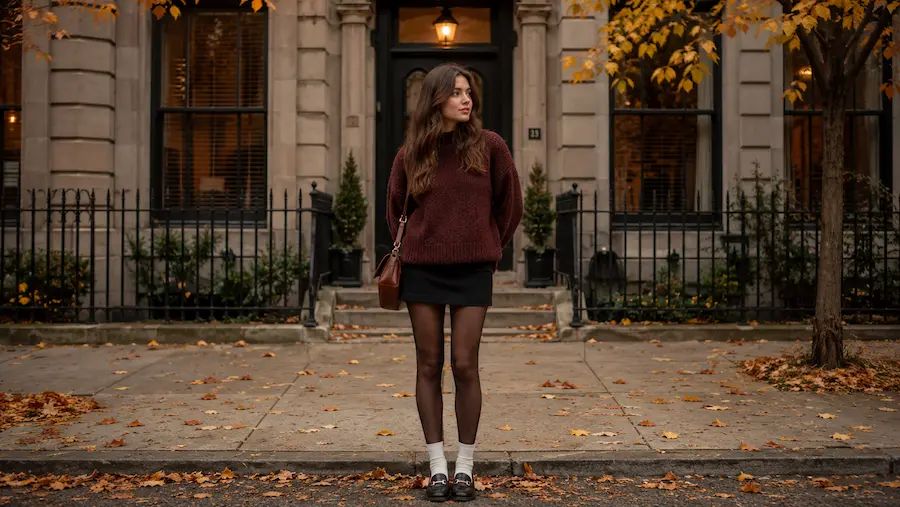
Dark Autumn Color Palette: Complete Styling Guide 2026
Discover your dark autumn color palette: rich warm tones for clothing, makeup & accessories. Find your perfect shades and shop with real confidence.
If you’ve ever taken a color analysis quiz and come out as “Autumn” from one and “Winter” from another, welcome to the most commonly confused corner of the color season world. Dark Autumn and Dark Winter sit right next to each other in the 12-season system, deep, dramatic, and intensely beautiful, and the line between them is warm versus cool. That’s it. One distinction that changes everything.
By the time you finish reading, you’ll know exactly what the dark autumn color palette looks like, which specific shades make Dark Autumns glow, and how to build a wardrobe and makeup bag around those colors. Most importantly, you’ll know how to figure out which side of the warm/cool line you actually fall on.
If you’re a Dark Autumn, you have a natural richness to your coloring that demands colors just as rich in return. Pastels wash you out. Cool tones make you look grey and flat. But burnt orange? Espresso? Deep olive? Those are the colors that make you look like you just got back from a vacation somewhere beautiful.
What Is Dark Autumn?
Dark Autumn is the darkest and warmest of the three Autumn sub-seasons. Within the 12-season system, every season is defined by three qualities: undertone (warm versus cool), value (light versus dark), and chroma (bright versus muted). For Dark Autumn, the primary quality is dark and the secondary quality is warm.
This means Dark Autumn’s best colors are deeply pigmented, yellow-based, and rich. Think mahogany , deep olive , burnt sienna , and bronze gold , the hues of a forest floor in late October filtered through golden light. The palette leans warm throughout, which is what separates it from Dark Winter, which is equally dark but cool-toned instead.
If seasonal color analysis is new to you, our guide to finding your color season is a great place to start, and the complete guide to seasonal color analysis shows where Dark Autumn sits on the full wheel.
Do You Have Dark Autumn Features?
Before diving into the palette, let’s figure out whether Dark Autumn matches your natural coloring. Think of it as looking in the mirror with fresh eyes.
Skin
Unmistakably warm. The undertone is golden or olive, sometimes with a bronzy quality that makes your complexion look sun-kissed even in winter. Your skin may range from light to deep, but regardless of shade there is a yellowish or greenish warmth beneath the surface. In natural daylight, look at the inside of your wrist: veins that appear more green or olive than blue or purple mean warm undertones.
Hair
Deep and warm. Common shades include dark brown, dark auburn, warm brown-black, and deep golden brown. The distinguishing feature is that rich undertone. In sunlight, Dark Autumn hair tends to catch warm, reddish or golden highlights rather than cool ashy ones.
Eyes
Depth and intensity. Deep brown, dark hazel, and dark olive green are the most common, often with warm amber or golden flecks. The key is that the eyes carry warmth. Cool grey or icy blue eyes are almost never Dark Autumn.
Contrast
Here is what really sets Dark Autumn apart: you have significant value contrast. Your hair is considerably darker than your skin, and your features appear vivid and dramatic. This is what allows you to carry deep, intense colors so effortlessly, because your own coloring has that same depth.
The Dark Autumn Color Palette
This is where it gets exciting. The dark autumn color palette (also called the deep autumn color palette) is anchored in warmth and depth. Every color in it is either yellow-based or has a warm bias. Even the blues and greens lean toward teal rather than cool navy or seafoam.
Your Dark Autumn Palette
Every shade here has weight. This is the richest, most saturated corner of the Autumn family.
Mahogany
Your signature shade
Burgundy
Deep and luxurious
Deep Olive
Dark and earthy
Bronze Gold
Rich metallic warmth
Forest Teal
Your cool accent
Burnt Sienna
Warm and intense
Chocolate
Everyday deep neutral
Warm Buff
Your best light base
Think of the palette in three tiers. Light neutrals (warm cream, camel, peach, soft gold, warm beige) are your background colors and work in every outfit as a contrast to your deeper tones. Dark neutrals (espresso, chocolate brown, dark olive, warm charcoal, aubergine, warm black) are your power shades for tailored pieces and outerwear. Accent colors (burnt orange, terracotta, rust, paprika, deep teal, mustard, bronze) are the shades that make Dark Autumns look genuinely radiant.
Reds and oranges
Burnt orange, rust, terracotta, paprika, tomato red. Best as statement tops, scarves and accent pieces that draw attention to your face.
Greens
Forest green, dark olive, deep teal, hunter green. Outerwear, knitwear and trousers. These are some of your best neutrals.
Browns
Espresso, chocolate, warm caramel, mahogany. Core wardrobe pieces: bags, boots, trousers, blazers.
Warm neutrals
Warm cream, camel, warm beige, peach. Layering pieces, basics and summer-weight items.
Jewel tones
Deep teal, burnt amber, aubergine, wine. Evening wear, blazers and statement accessories.
Yellows and golds
Mustard, deep gold, bronze, ochre. Accent pieces, jewelry and scarves. These are extraordinary near your face.
What Works and What Drains You
Colors That Flatter You
- Mahogany , rust and deep warm reds are your easiest win
- Burgundy , oxblood depth for evening
- Deep olive , dark forest greens as a neutral
- Bronze gold , antique gold and deep ochre
- Chocolate , coffee browns as core neutrals
- Forest teal , balances all that warmth
Colors That Fight You
- Pale dusty pink , vanishes against your depth
- Cool bright pink , the blue cast fights your undertone
- Frosty blue-grey , icy tones flatten you
- Optic white , too cold and too abrupt
- Mid cool grey , reads flat on warm skin
- Washed-out mauve , pastel neutrals disappear
The test is always the same: hold the color near your face in natural light. If your skin looks clearer, your eyes brighter, and your complexion more alive, it’s a good color. If you look tired, grey, or like you need more sleep than you’ve gotten, put it back.
Building Your Dark Autumn Wardrobe
The beauty of the dark autumn color palette is that it lends itself to an incredibly cohesive wardrobe. Because the colors are all rooted in the same warm, earthy family, everything coordinates almost automatically.
Dark olive jacket or coat
One of your absolute best neutrals. Pairs with everything from jeans to workwear and makes you look polished without trying.
Chocolate brown leather
A bag, boots or belt in deep warm brown anchors any outfit and replaces the cold black that doesn't quite work for you.
Mustard yellow knit
Worn near the face, mustard is one of the most flattering shades in your palette. A simple crew-neck beats any amount of accessories.
Burgundy or wine blazer
Deep, warm, and intensely flattering. This becomes your power piece.
Forest green top
Cool enough to feel sophisticated, warm enough to work with your undertones.
Warm black, not cool black
Look for pieces described as warm black or black with brown tones. Pure blue-black reads slightly ashy on you.
Three Outfit Formulas That Always Work
When you know your palette, building outfits stops being a guessing game.
Neutral foundation plus warm accent. Start with a camel coat or warm beige top as your base, then add a burnt orange scarf or rust bag. The neutral calms the look down while the accent color does the glowing-near-your-face work.
Dark tonal. Layer different shades from the same warm-dark family. Espresso trousers with a chocolate brown knit and a deep aubergine scarf. The variation in depth creates richness without any clashing.
Value contrast. This one uses the natural contrast in your features as a template. Pair a deep dark neutral (forest green coat, espresso jeans) with a lighter warm neutral (warm cream blouse, camel tee). The light and dark pairing mirrors the contrast between your skin and hair, and it is always flattering.
Fabrics and Textures
Your palette calls for textures that match its richness. Suede, velvet, cashmere, brushed wool, and leather all carry the same depth as the colors you wear best. Crisp, cool-toned fabrics like stark white linen or poplin can feel jarring against your warmth. When in doubt, choose something that feels as luxurious as your palette looks.
The Dark Autumn Makeup Guide
Makeup for Dark Autumns follows the same principle as the wardrobe: lean warm, lean deep. The goal is to enhance the natural richness in your features, not compete with it.
Choose foundations with a golden, warm, or bronze undertone. Anything described as warm, golden, olive or honey is likely in your range, and neutral-warm formulas work too. Avoid pink or cool undertones, which will make your skin look slightly grey or flat.
Your Best Lip Shades
The richness of the palette translates beautifully to lip color. You can wear the most dramatic shades on the wheel without it ever looking costumey.
Brick Red
Your everyday red
Terracotta
Warm and wearable
Wine
Evening depth
Cinnamon
The soft option
What to avoid on lips: cool reds with a blue undertone, cool pink, fuchsia, and lilac. These pull the warmth out of your complexion instead of enhancing it.
Bronzer is your best friend, and you can go darker than you think, because Dark Autumn skin blends deeper shades beautifully. For eyes, your best shades are warm brown, deep forest green, gold, olive, burnt copper and deep plum. For blush, deep terracotta, warm peach and bronze flatter you most. You want something that mimics natural warmth in the cheeks, not a cool pink flush.
| Product | Best Dark Autumn shades |
|---|---|
| Foundation | Golden, warm, olive, honey undertones. Avoid cool-pink bases. |
| Concealer | Match foundation undertone. Warm-neutral, one level lighter. |
| Bronzer | Matte or lightly shimmery. Go deeper than seems safe. |
| Blush | Terracotta, warm peach, bronze, deep apricot. Cream formulas add warmth naturally. |
| Eyeshadow | Warm brown, deep forest green, gold, olive, burnt copper, deep plum. |
| Eyeliner | Warm brown, espresso, dark olive, aubergine. Avoid cool black. |
| Mascara | Brown-black or warm aubergine. |
| Lipstick | Brick red, terracotta, rust, paprika, wine, deep burgundy, warm plum. |
Dark Autumn Hair Colors
If you have naturally dark auburn, dark brown, or warm brown-black hair, you’re already in the right range. The goal with any hair color work is to stay warm and avoid anything that reads as ashy or cool.
Deep chestnut and mahogany are quintessentially Dark Autumn: rich warm browns with reddish undertones. Dark auburn looks genuinely at home against Dark Autumn skin. Warm brown-black gives you the darkest end of your natural range with brown rather than blue undertones. If you want dimension, deep caramel and copper highlights deepen without cooling you down.
Ash brown, cool blonde, platinum highlights, and jet black with cool blue-black tones all add a grey quality to your warm complexion. You might be drawn to them because they look striking in a magazine, but against your skin they create a washed-out effect that works against everything the dark autumn color palette is trying to do for you.
Accessories and Metals
Metal choice might seem like a small detail, but it makes a surprising difference. The wrong metal can make skin look slightly sallow or dull. The right one looks like it was made for you.
Dark Autumns wear warm metals beautifully. Bronze, brass, copper, and gold are your best options. Look for textured, antiqued, or hammered finishes over high-polish shine, because they match the earthy richness of the palette.
| Metal | Why it works for Dark Autumn |
|---|---|
| Bronze | Deep warmth that mirrors the palette’s earth tones |
| Brass | Slightly more golden, excellent with mustards, greens and warm neutrals |
| Copper | One of the most flattering metals for Dark Autumns |
| Gold (yellow) | Works especially well in textured or matte finishes |
| Pewter or oxidized silver | Warmer than bright silver, workable if the finish is darkened |
For gemstones: garnet, carnelian, jasper, amber, and tiger’s eye all harmonize with the dark autumn color palette. Emeralds set in yellow gold are another excellent choice. Avoid bright cool silver and platinum, which contrast too sharply with warm undertones.
Dark Autumn Celebrity Examples
Sometimes the easiest way to understand a color season is to see it on a face you recognize.
Halle Berry
One of the clearest examples: deep warm skin with a golden-bronze quality, rich dark hair, and deeply warm brown eyes. In deep burgundy, warm rust and dark olive, the colors amplify something that was already there.
Olivia Munn
Golden-olive skin, dark brown hair with warm undertones, and expressive dark eyes. She looks most radiant in warm jewel tones and most muted in cool pastels.
Penelope Cruz
Golden-olive complexion, deep warm brown hair, and rich dark eyes. She instinctively gravitates toward earthy reds, warm blacks and deep olive.
Angela Bassett
The high-contrast Dark Autumn combination of deep skin warmth paired with intensely dark hair and eyes.
Shay Mitchell
Same pattern, slightly lighter register. Watch her red carpet looks: in palette, she looks effortlessly powerful.
Dark Autumn vs Dark Winter
Both seasons are deeply pigmented and dramatic, which is where the confusion comes from. The difference is undertone, and it decides every other choice you make.
Dark Autumn
- Secondary quality: Warm
- Palette base: Yellow-based
- Best neutrals: Chocolate brown, dark olive
- Best reds: Terracotta, rust, brick red
- Icy colors: Washed out
- Black: Cool black is slightly harsh
Dark Winter
- Secondary quality: Cool
- Palette base: Blue-based
- Best neutrals: Charcoal, cool black
- Best reds: Cool red, blue-based burgundy
- Icy colors: Can carry them
- Black: Pure cool black is a best color
The practical test: hold cool grey and warm camel next to your face. The one that brings your skin to life tells you which side of the line you’re on.
How to Confirm You’re a Dark Autumn
Here’s the honest challenge: self-diagnosis in color analysis is genuinely difficult. The warm and cool distinction that separates Dark Autumn from Dark Winter is subtle enough that context matters. The lighting you’re in, what you’re wearing while you assess, even the time of day can shift your perception.
The draping test. Hold a warm, earthy fabric (camel, rust, olive) close to your face in natural daylight, then swap to something cool-toned (cool grey, pale blue, bright white). The warm fabric should make your skin look more alive, your eyes clearer, and any redness or shadows less pronounced.
The black test. Pure, cool black often makes Dark Autumns look slightly tired or ashy. Dark brown or warm black looks sharp and intentional. If dark brown is consistently more flattering on you than true black, that’s a warm signal.
Take the draping test. Hold warm and cool colors to your face. Notice which ones make you look more alive. Then take that knowledge shopping, get dressed with intention, and watch what happens when everything in your wardrobe is working with your natural coloring instead of against it.
Related Reading
- What Is My Color Season? The Ultimate 2026 Guide is the place to start if you are not yet sure you are an Autumn.
- True Autumn Color Palette Guide covers the lighter, purely warm neighbour.
- Dark Winter Color Palette Guide is the cool mirror of the deep end of Autumn.
- Dark Autumn vs Dark Winter: How to Tell the Difference walks through the warm-versus-cool test in more depth if this guide left you unsure.
- Bright Winter Color Palette Guide is worth a look too if your coloring feels more vivid than deep.
- Deep Autumn Color Analysis has the full palette, physical traits and FAQ in our dedicated Deep Autumn guide.
- The 12 Color Seasons: Complete Guide shows where Dark Autumn sits on the full wheel.
FAQ – Dark Autumn Color Palette
Is Dark Autumn warm or cool?
What's the difference between Dark Autumn and Dark Winter?
Can Dark Autumn wear black?
Can Dark Autumn wear white?
What season is closest to Dark Autumn?
Discover Your Best Colors
Take a quick quiz and get AI-powered seasonal color analysis with personalized recommendations.