

Light Spring Color Palette: The Complete Guide
Discover your complete light spring color palette: hex codes, traits, celebrity examples, plus clothing, makeup and hair advice that actually flatters.
You bought the soft pink blouse because everyone said pastels were safe, and by lunch you looked washed out and half asleep. So you swapped it for a camel sweater, certain neutral would fix things, and that read flat too. The problem was never pastel versus neutral. It was that your coloring needs warm, light and soft all at once, and almost nothing on the rack is cut that way.
That exact combination has a name: the light spring color palette, worn by what colorists call Light Spring. It shares spring’s golden undertone with Warm Spring and Bright Spring, but turns the volume down on saturation and depth, staying pale and delicate where they run rich or vivid. If your hair is light golden brown, strawberry blonde or light auburn, your eyes are a clear light color rather than a deep one, and your skin carries a soft warm glow instead of richness, you are likely looking at your season right now.
This guide lays out the full palette: the exact neutrals, brights and metal that work, the shades to put down for good, and the two seasons people confuse it with most, Warm Spring and Light Summer, so you can rule each one out with a real test instead of a guess. By the end you will know exactly what to reach for on the morning you need to look awake, not just dressed.
What Does Light Spring Coloring Actually Look Like?
The single most reliable marker is warmth sitting on top of lightness: your skin, hair and eyes all read as pale and golden at once, never pale and ashy, never golden and deep.
Skin
Fair to light-medium, with a warm undertone that leans peachy or golden rather than pink or olive. It flushes easily and looks best without heavy foundation, since anything too deep or too cool sits visibly on top of it rather than blending in.
Hair
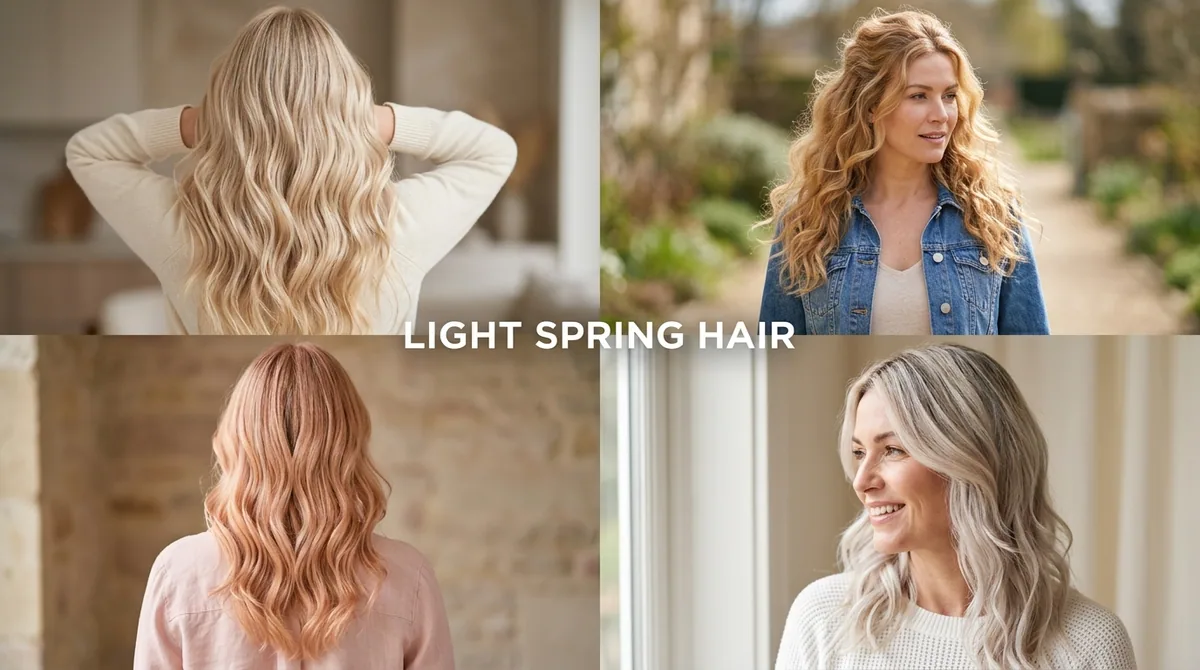
Light golden brown, strawberry blonde, light auburn or light golden blonde, with visible warmth even in low light. There is no ash, no cool beige cast, just a soft gold or copper glow that gets lighter, not darker, when the sun hits it.
Eyes
Clear and light rather than deep or smoky: light blue-green, light golden hazel or light warm brown. The iris often has a visible gold or amber fleck near the pupil, and the contrast between iris and white stays soft, never stark.
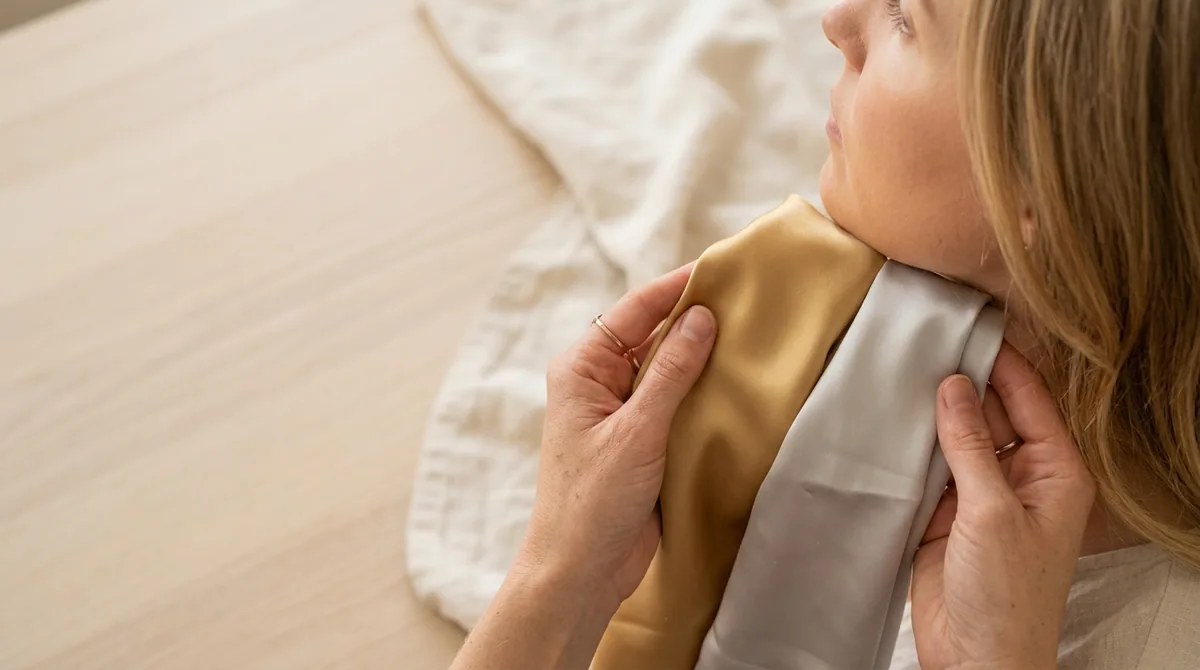
The quickest home check is holding a piece of gold fabric or jewelry and a piece of pale, washed-out silver next to your face in daylight. If the gold warms you up and the silver leaves you looking slightly gray or flat, that is your warmth confirmed. Against Light Summer, the tell is exactly that gold-over-ash quality: Light Summer wants the silver. Against Warm Spring, the tell is intensity: hold a richly saturated marigold or deep golden brown near your face and watch it start to overpower rather than flatter. Light Spring wants the pale version of every warm color, not the loud one.
The Light Spring Color Palette
Every shade in this palette answers to two rules at once: it has to stay light in value and warm in undertone. Drop either one and the color starts working against your coloring instead of with it.
Light Spring Neutrals
The base layer for everything else: soft, warm and never heavier than it needs to be.
Warm Ivory
Your everyday white
Camel
Golden, not muddy
Light Taupe
Soft, warm gray substitute
Soft Denim Blue
The one deeper neutral
Light Spring Brights
Clear, light and warm at once, these are the colors that do the most flattering work.
Coral Pink
Easy, warm and wearable
Peach
Soft glow, no harshness
Buttery Yellow
Warm, never mustard
Apple Green
Fresh, light and golden
Aqua
Clean, bright brightener
Periwinkle
Cool note, kept light
Metals follow the same warm-and-light logic. Soft gold reads correctly against this skin, while silver and white gold tend to sit slightly gray on it, the same flatness you’d get from a color that’s warm but too dark or light but too cool. This is exactly what separates Light Spring from its neighbors: push any of these shades darker and denser and you land in Bright Spring territory, strip the warmth out and you land in Light Summer. Reach for the neutrals to anchor an outfit, then let one bright do the talking near your face, in a blouse, a scarf or a lip color, rather than spreading several brights across one look.
Light Spring Colors to Wear and Avoid
The flattering shades stay light and gold at the same time, while the ones to avoid fail on depth, temperature, or both.
Colors That Flatter You
- Coral pink , an easy, everyday warm win
- Buttery yellow , soft and warm, never reads mustard
- Aqua , clean and light, a natural brightener
- Peach , gives a soft glow with no harshness
- Apple green , fresh and golden, never olive
- Camel , warm and light enough to sit near the face
Colors That Fight You
- True black , drains the warmth and overwhelms a light palette
- Deep burgundy , too dark and too cool for this coloring
- Icy blue , fights the golden undertone despite being pale
- Chocolate brown , too deep and heavy for a light palette
- Cool gray , ashy and flat against warm skin
- Mustard , warm enough but too dark and dense to stay light
Look at what separates the two columns and you can judge any shade not listed here. The flattering side is always light in value and warm in undertone at the same time, nothing sinks past a medium depth and nothing loses its gold. The avoid side fails one of those two tests, sometimes both: true black and chocolate brown are warm-neutral enough on paper but far too dark, cool gray and icy blue are light enough but carry no warmth at all, and deep burgundy and mustard manage to get both wrong at once. If you’re holding a color up to your face and unsure, ask two questions in order: is it light enough, and is it warm enough. A yes to only one still means no.
Light Spring vs Light Summer: Softer Warmth vs Softer Coolness
These two get mistaken for each other constantly because they share the same lightness and the same low, gentle contrast between skin, hair and eyes. Stand a Light Spring and a Light Summer next to each other and the first thing you’ll notice is how similar the overall volume is: pale skin, soft hair color, no hard edges anywhere. The difference only shows up once you ask a single question: is the glow gold or rose?
Light Spring
- Undertone: Golden and warm
- Best metal: Soft gold
- Best red: Coral red
- Hair tell: Golden, honey or strawberry tones
Light Summer
- Undertone: Rosy and cool
- Best metal: Silver
- Best red: Watermelon pink
- Hair tell: Ash blonde or cool light brown
Everything else about these two seasons runs parallel. Both stay light in depth, both do best in soft rather than saturated color, both look overdone in heavy black or deep jewel tones. Warm versus cool is the entire disambiguation, and it’s the one axis worth testing carefully before you buy anything.
The quickest home check is the same gold-versus-silver test used for the individual seasons, just held under the chin instead of at arm’s length. Drape a soft gold scarf or piece of jewelry under your jaw in daylight, then swap it for a silver one. If the gold makes your skin look lit from within and the silver looks slightly chalky by comparison, you’re reading Light Spring. If it flips the other way, the silver settling in while the gold looks faintly jaundiced, that’s Light Summer.
Celebrity Examples of Light Spring Coloring
None of these women wear an official season tag, since only a photo analysis of your own coloring can do that for you. What they do show is the light-plus-warm combination in action, which is easier to recognize on a familiar face than in the abstract.
Reese Witherspoon
Light golden blonde hair with real warmth in it, fair skin with a peachy undertone, and light eyes that never read as deep or smoky. The overall effect is bright without being high-contrast, which is the Light Spring signature.
Blake Lively, lighter eras
In her honey-blonde stretches, the hair carries a warm, almost gilded cast rather than a cool platinum one. Paired with fair, warm skin, the combination sits squarely in the light-and-golden territory this palette is built around.
Emma Stone, strawberry-blonde period
During her lighter auburn-blonde phase, the hair color, warm fair skin and light green-hazel eyes all stayed in the same soft, golden register. None of the three features ran deep or cool enough to pull the look elsewhere.
Use these as a visual reference, not a verdict. The point of each example is the pattern: light value and warm undertone showing up together in hair, skin and eyes at once. If you can see that pattern in your own coloring but aren’t sure it’s this strong, that’s exactly the kind of borderline case a proper analysis is built to settle.
Light Spring vs Warm Spring: Same Warmth, Different Volume
Where Light Spring and Light Summer split on temperature, Light Spring and Warm Spring split on volume. Both run golden. Both carry the same peachy warmth in the skin and the same honeyed cast in the hair. Nobody confuses these two on undertone. The confusion is about how much color and how much depth each one can actually hold before the face stops looking lit up and starts looking overwhelmed.
Warm Spring can go deeper and richer everywhere. Think saturated golden brown, marigold, a fuller-bodied coral, all without the coloring reading as heavy. Light Spring can’t follow it there. Every shade in this palette stays pale and a little delicate, and pushing past medium depth is where it starts to fight the face instead of framing it.
The undertone test won’t separate these seasons because they’re the same undertone. Depth is the whole question: how saturated and how dark a color can get before your own coloring gets outweighed by it. Light Spring’s answer is “not very.” Warm Spring’s is “considerably more.”
Best Fabrics and Finishes for Light Spring
Color is only half the equation. The weight and finish of a fabric can flatter or undo the same hue, which matters just as much for a coloring this light and low-contrast.
| Fabric or finish | Why it works | Avoid instead |
|---|---|---|
| Lightweight cotton, cotton voile | Keeps the look airy and matches the softness of the coloring | Heavy structured wool, which reads bulky and stiff against a light frame |
| Silk charmeuse, fine silk blends | Soft, gentle sheen echoes rather than fights the palette’s delicacy | High-shine sequins or metallic lamé, which overpower the face |
| Fine linen | Crisp texture without added visual weight | Stiff, heavy tweed, which adds bulk the coloring can’t carry |
| Matte-to-satin finish makeup | Mirrors the palette’s soft, low-contrast quality | Full matte finish or heavy contour, which reads harsh on light features |
Use this as a filter before you buy, not just for color but for how a piece is made. A camel coat in heavy boiled wool and the same camel in a lighter brushed cotton will read completely differently on Light Spring coloring, even though the hex code is identical. When in doubt, pick the lighter, softer-handling version of any fabric on the list, and let the makeup finish follow the same logic: soft sheen over flat matte, always.
Related Reading
- Light Spring Color Analysis is the full pillar page for this exact season, with more depth than a single guide can hold.
- Season Guide lays out every system and all twelve seasons if you want the bigger picture before committing to one.
- Warm Spring Color Analysis covers the deeper, richer neighbor that shares Light Spring’s golden undertone.
- Light Summer Color Analysis covers the cooler, rosier neighbor that shares Light Spring’s pale, low-contrast build.
- Bright Spring Color Palette Guide shows the third spring for contrast, warm but saturated instead of soft.
- What Is My Color Season? The Ultimate 2026 Guide explains the method behind all of this if you want to know how the answer actually gets found.
FAQ – Light Spring Color Palette
What is the Light Spring color palette?
What colors should Light Spring avoid?
How do I know if I'm Light Spring or Light Summer?
How do I know if I'm Light Spring or Warm Spring?
Can Light Spring wear black?
What is the best metal for Light Spring, gold or silver?
What hair colors suit Light Spring?
Does Light Spring coloring change with tanning or aging?
Discover Your Best Colors
Take a quick quiz and get AI-powered seasonal color analysis with personalized recommendations.