What Is My Color Season? 12-Season Guide for 2026
Find your color season with this 2026 guide to undertone, depth, clarity, the 4- and 12-season systems, at-home tests and AI photo analysis.
Have you ever put on a shirt and thought, “Why do I suddenly look tired and washed out?” Or tried on a lipstick that made your skin glow like you just had 8 hours of sleep?
That’s seasonal color analysis at work.
Knowing your color season is a practical way to look more vibrant, confident and put-together without buying a single new item you will regret later. The framework gives you a repeatable way to compare colors and can change how you shop, dress and use what is already in your wardrobe.
In this complete 2026 guide, you will learn what color seasons are, how the 4-season and 12-season systems work, how to test yours at home and how photo analysis differs from a self-reported quiz.
What Is Seasonal Color Analysis?
Seasonal color analysis is a system that groups your natural coloring (skin, hair, and eyes) into a set of colors that harmonize with you. These palettes make you look healthy, bright, and youthful. Wear the wrong ones, and you can look dull, sallow, or older, even with great skin and perfect lighting.
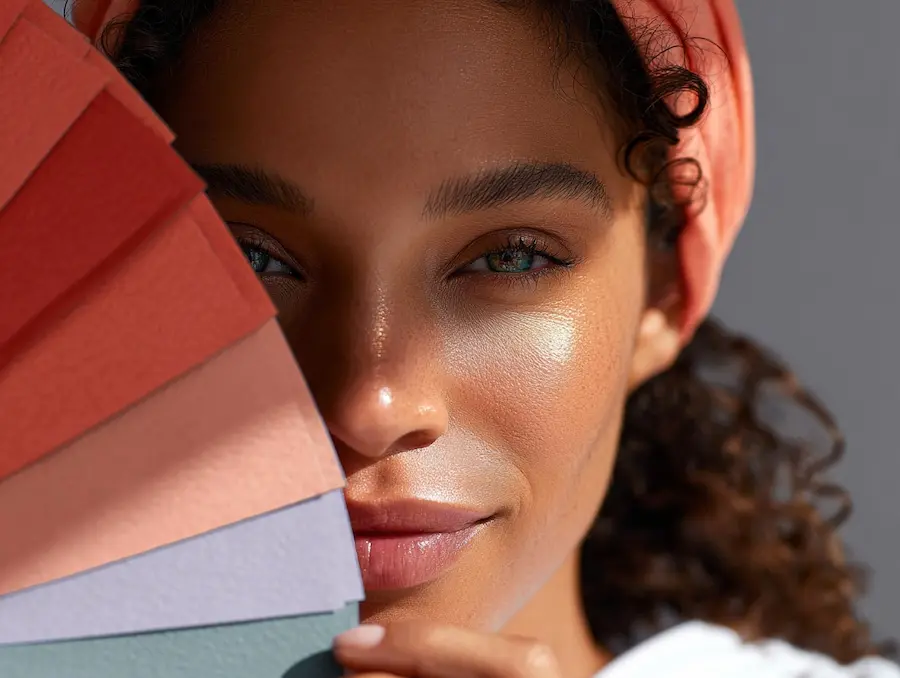
The system became widely known in the 1980s through the book Color Me Beautiful by Carole Jackson. Many analysts now use a 12-season model, which adds transition palettes to the original four groups.
The 3 Dimensions of Color That Determine Your Season
Every person (and every color) can be broken down into three traits. Understanding these is the key to everything else.
Dimension 1
Undertone
Warm (golden, peachy, yellow-based), Cool (rosy, pink, bluish), or Neutral (a balanced mix of both).
Dimension 2
Depth
How light or deep your overall coloring is. Fair skin and light hair points toward a Light season. Deep olive skin and dark hair points toward a Deep season.
Dimension 3
Clarity
How vivid or muted your coloring is. High-contrast, vivid features point to a Bright season. Blended, soft features point to a Muted season.
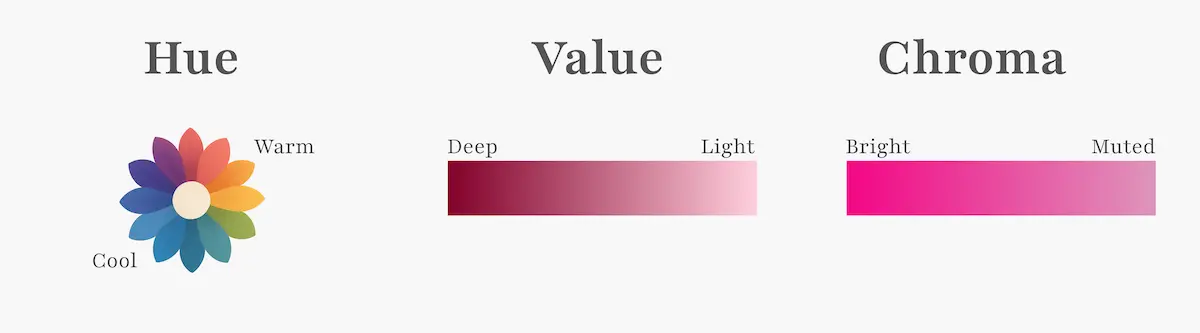
These three dimensions together create the 12-season system we use today.
The 4 Main Color Seasons (Quick Overview)
Before we go into the 12 sub-seasons, here’s the big picture. Each of the four classic seasons maps to a combination of undertone, depth, and clarity.
Spring
Warm · Light · Bright
Springs have warm golden or peachy skin, light-to-medium coloring, and clear, vivid features. Your best colors are fresh and warm: coral, peach, warm yellow, and clear aqua. Think sun-drenched meadow, not dusty pastel.
Celebrity examples: Blake Lively, Cameron Diaz, Taylor Swift
Read the full Spring Color Analysis guide →
Summer
Cool · Light · Muted
Summers have cool or neutral-cool skin with soft, blended features. Colors that look washed-out on others look sophisticated on you: dusty rose, powder blue, soft lavender, mauve. Your palette is like an English garden on an overcast day.
Celebrity examples: Kate Middleton, Emily Blunt, Margot Robbie
Read the full Summer Color Analysis guide →
Autumn
Warm · Deep · Muted
Autumns have warm, earthy undertones and rich, deep coloring. Your best colors are drawn from nature in October: rust, olive, burnt orange, terracotta, warm brown, and forest green. Avoid cool pastels, which make you look sallow.
Celebrity examples: Julia Roberts, Jennifer Lopez, Gisele Bündchen
Read the full Autumn Color Analysis guide →
Winter
Cool · Deep · Bright
Winters have cool or neutral-cool skin with high contrast between features. Your colors are bold and clear: pure white, true black, royal blue, emerald, fuchsia, and icy pastels. You’re one of the few people who can wear stark black and white and look amazing.
Celebrity examples: Angelina Jolie, Anne Hathaway, Viola Davis
Read the full Winter Color Analysis guide →But the real magic is in the 12 sub-seasons. Most people don’t fit perfectly into one of these four broad categories, and that’s where things get genuinely useful.
The Complete 12-Season Color Analysis System (2026 Edition)
The 12-season system adds three variations within each main season. This extra detail can make it easier to distinguish neighboring palettes, such as Soft Summer and Soft Autumn.
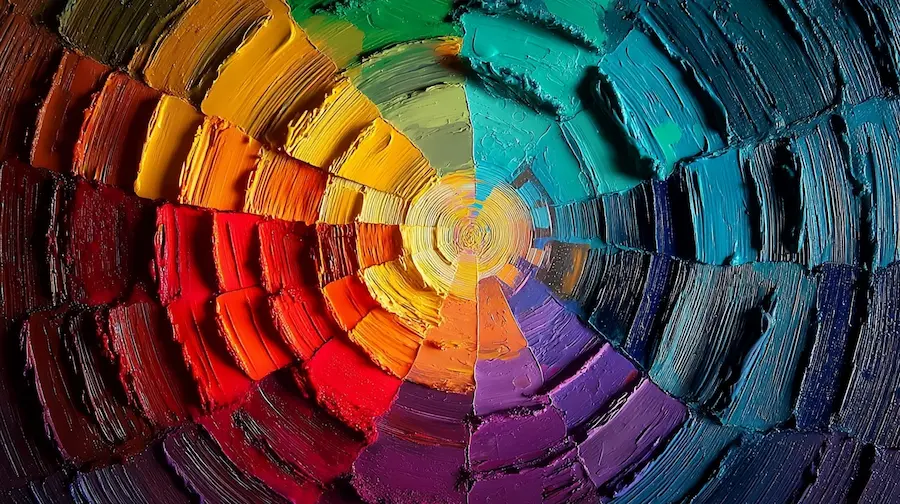
Here is every season with its key traits and commonly cited celebrity examples. Celebrity typings are interpretive because we cannot test them under controlled draping conditions.
| Season | Undertone | Depth | Clarity | Best Colors Feel Like | Celebrity Examples |
|---|---|---|---|---|---|
| Bright Spring | Warm | Light-Medium | Bright | Fresh tropical fruits, juicy corals | Emma Stone, Milla Jovovich |
| True Spring | Warm | Light | Bright | Sunny meadows, golden daffodils | Blake Lively, Cameron Diaz |
| Light Spring | Warm | Light | Medium | Soft pastels with a warm glow | Taylor Swift, Scarlett Johansson |
| Light Summer | Cool | Light | Muted | Icy pastels, powder blue | Elle Fanning, Margot Robbie |
| True Summer | Cool | Light-Medium | Muted | English garden roses, soft lavenders | Kate Middleton, Emily Blunt |
| Soft Summer | Cool | Medium | Muted | Dusty roses, foggy lavenders | Sarah Jessica Parker, Cara Delevingne |
| Soft Autumn | Warm | Medium | Muted | Burnt terracotta, olive greens | Gisele Bündchen, Jennifer Aniston |
| True Autumn | Warm | Medium-Deep | Muted | Pumpkin spice, rich rusts | Julia Roberts, Jennifer Lopez |
| Deep Autumn | Warm | Deep | Medium | Spiced reds, deep teals | Halle Berry, Meghan Markle |
| Bright Winter | Cool | Medium-Deep | Bright | Jewel tones, icy pinks | Angelina Jolie, Megan Fox |
| True Winter | Cool | Deep | Bright | Pure reds, royal blues, stark white | Liv Tyler, Marion Cotillard |
| Deep Winter | Cool | Deep | Bright | Dramatic blacks, emerald, magenta | Anne Hathaway, Viola Davis |
Explore the 12 seasons interactively
Now that you know what each season looks like on paper, try it for real. Tap any circle on the wheel below to see that season’s signature palette. You can also upload a selfie and compare it with the colors, which recreates the basic logic of holding fabric swatches near the face.
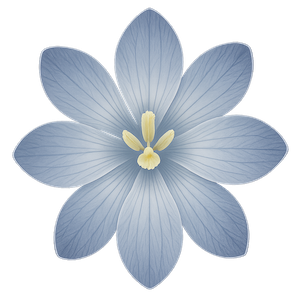
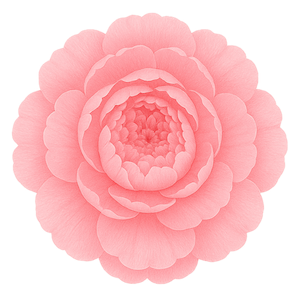
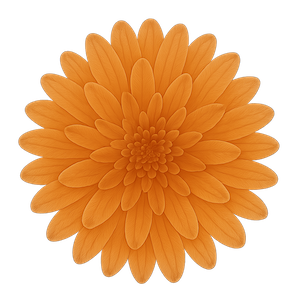

Palette Preview!
Click on a circle for a color palette preview
Most people get down to two candidates and stall there. When that happens, compare any two palettes side by side to see exactly where the two seasons diverge on undertone, depth and clarity.
Personal Color Analysis Trends in 2026
The practical shift in personal color analysis is access. You no longer need to book an in-person appointment before you can start testing a season, but easier access does not make lighting, camera processing or personal judgment irrelevant.
- Photo tools give you a consistent image-based starting point instead of relying entirely on self-description.
- The 12-season system adds transition types such as Soft Summer, Soft Autumn and Light Spring, which helps people who do not fit neatly into one of the original four groups.
- Capsule wardrobes make a palette useful after the initial result, because a smaller set of coordinated pieces removes more shopping guesswork than a list of flattering colors alone.
How Do I Find My Color Season?
(Traditional DIY Methods)
Here are the classic techniques people have used for decades. They’re fun to try and can give you a rough sense of direction, but they all have real limitations.
Fabric Draping (Most Accurate Traditional Method)
Hold different colored fabrics or clothes under your face in natural daylight, with no makeup on. Take photos. The colors that make your skin glow and eyes sparkle are in your season.
The Jewelry Test
Gold vs. silver. Warm seasons usually look better in gold; cool seasons look better in silver.
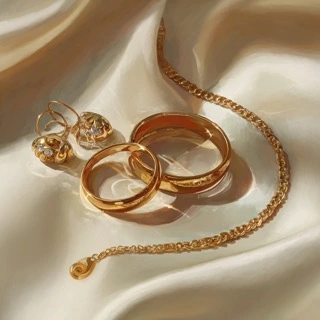
Gold: warm seasons
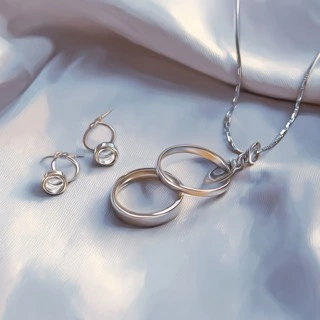
Silver: cool seasons
This test is a useful starting point, but it’s not reliable enough on its own for neutrals, which is the most common result.
The Vein Test (Popular but Limited)
Look at your wrist veins in natural light: greenish veins suggest warm undertones, bluish-purple suggests cool. The problem is that many people genuinely can’t tell, and lighting makes a huge difference.
How AI Color Analysis Works From a Photo
Upload one clear, makeup-free selfie in indirect daylight. The tool samples color relationships across the image and returns the closest match in the 12-season system.
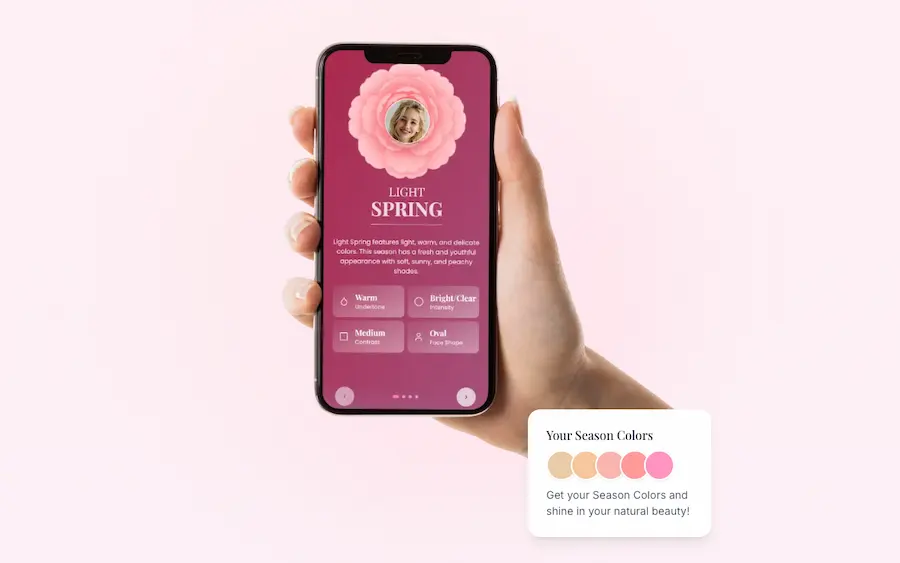
Lighting remains the biggest variable. Avoid warm bulbs, filters, heavy makeup and mixed light, then confirm the suggested palette against clothes you already own.
Get Your AI Color Season Analysis Now
Why Knowing Your Color Season Changes Everything
Shop with confidence
Stop wasting money on clothes that looked great in the store but wrong on you at home. Your palette is your filter.
Look instantly younger
The right colors reflect light into your face and minimize shadows. The wrong ones do the opposite.
Build a wardrobe that actually works
When everything you own is in your palette, almost everything goes with everything. Getting dressed becomes simple.
Nail makeup and hair color
Foundation undertones, blush, lipstick, and even hair dye all have color temperatures. Your palette shows you exactly which ones work.
Feel confident every day
When you know your colors, you stop second-guessing. You reach for things that work, and you feel it.
A result you can share
Your season is a simple, memorable label that friends and family can use to give you gifts that actually fit your style.
A useful palette should make everyday decisions easier. Test it first with clothing you already own, then use the colors that consistently make your complexion look even and defined.
Ready to Find Your Season?
Stop guessing. Stop buying clothes that looked cute online and wrong in your mirror.
Upload a photo, get a 12-season result and use the full palette, do’s and don’ts list, and shopping recommendations as a practical starting point.
Get Your AI Color Season Analysis
You’ll receive a suggested season from the 12-season system, a full color palette with hex codes, and personalized shopping recommendations.
Frequently Asked Questions
Can my color season change with age or hair dye?
Does color analysis work for men and all skin tones?
I got different answers from different quizzes. Which one is right?
I seem neutral. Where do I fit?
How is AI color analysis different from a free online quiz?
What if I feel like I am between two seasons?
How do I actually use my color palette in everyday shopping?
Discover Your Best Colors
Take a quick quiz and get AI-powered seasonal color analysis with personalized recommendations.